
Parametric models · practical guides
Hold a board by its edges
This model is for measured board edges and a stated insertion path, not a universal mount for every ESP32 or development board.
Download these original sample files directly. Creating models, checking files and AI edits in PurCad use the credit terms shown before each paid action.
Files
Open the SCAD workspace, upload model.scad as the main source, change a parameter and compile. Compare the dimensions, then download the STL from that successful build.
Download these original sample files directly. Creating models, checking files and AI edits in PurCad use the credit terms shown before each paid action.
Parameters to check
| Parameter | Value | Checked endpoint values |
|---|---|---|
board_length | 60 mm | 40 / 100 |
board_width | 40 mm | 25 / 80 |
rail_clearance | 0.6 mm | 0.3 / 1.2 |
Geometry evidence
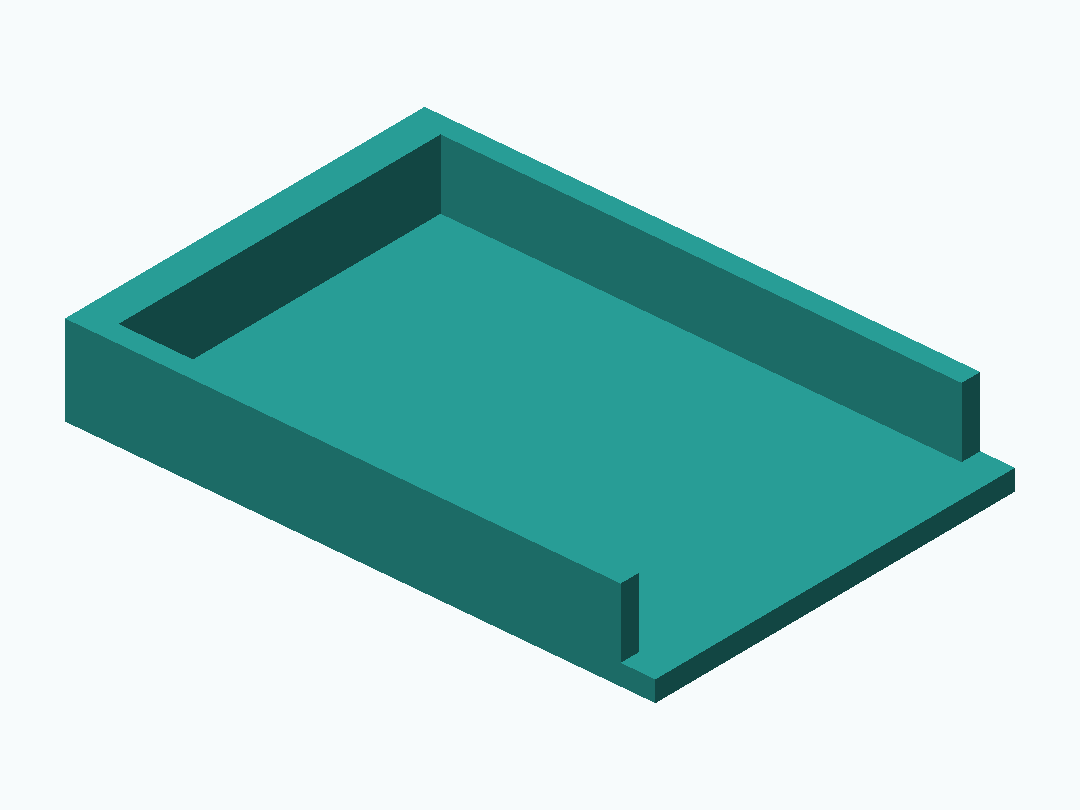
Model file bounds, including any arranged parts: 68 × 46 × 10.4 mm.
A displayed model and its dimensions are geometry evidence, not proof of physical fit, strength, electrical clearance, or print success.
Build measurements (JSON)Measure the board and service path
Record board thickness, usable edge length, components near the edge, connector location, and the direction needed to insert and remove the board.
Protect access and removability
Keep rails away from connectors and controls. Inspect the modeled opening, then test insertion force and port access on a sample before relying on it in an enclosure.
Questions this page answers
How do I secure an ESP32 board without mounting holes?
Use a measured edge holder, rail, or tray only where the board has a clear, component-free edge. This reference does not claim compatibility with a named ESP32 board.
Can I use rails or a removable tray instead of glue?
Yes, if the board can slide or lift through a planned service path without hitting components. Test retention and removal with your actual board and material.
How do I leave USB access in a board holder?
Measure the connector envelope from the same board datum and reserve the opening before positioning a rail or clip. Confirm cable access physically.
How can I replace the board later without breaking the case?
Design an insertion/removal path and avoid trapping the board behind permanent features. A viewport check is not a guarantee that a real board can be removed.